

Resilience and business continuity
In a world that is increasingly dependent on digital services, your company needs to rely on solutions that are not only effective, but also reliable. It is essential to have a Disaster Recovery Plan (DRP) that not only guarantees the continuity of your business, but also protects the experience of your customers.

What is a DRP?
A DRP is a set of procedures and policies designed to help an organization recover from catastrophic events that could affect its technological infrastructure and, therefore, its ability to operate normally.
In AWS, this involves implementing strategies to protect the data and applications running in the AWS cloud from natural disasters, human errors, hardware failures, cyber attacks, or other events that could cause significant disruptions in services.
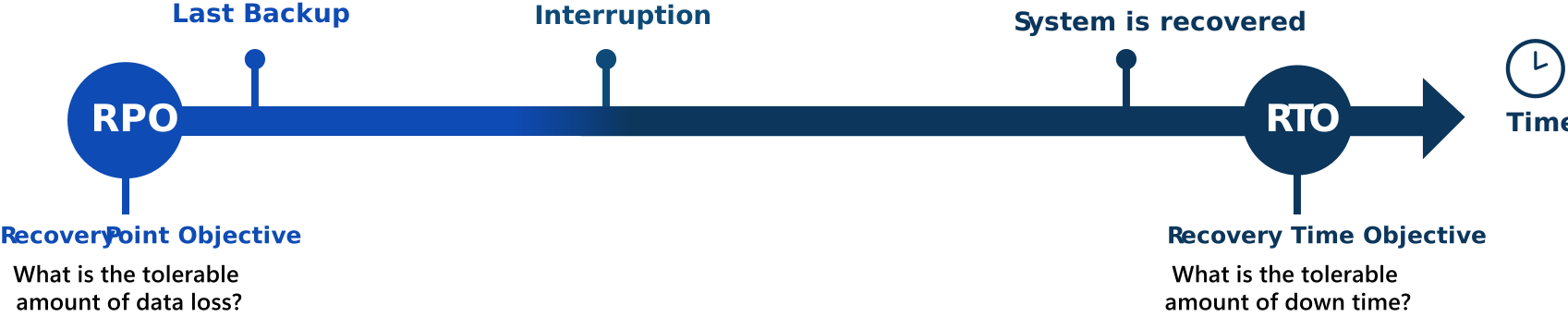
The DRP is based on the needs of companies according to the recovery time (RTO) and the recovery point (RPO) that guarantee business continuity
Ensure the continuity of your business today!
Start a DRP plan now

Business
resilience objectives
- Continuous service availability.
- Protection of critical data.
- Risk reduction.
- Compliance with regulations and standards.
- Backups and recovery of physical and virtual servers.
- Server enablement in AWS.
- Continuous replication.
- Encryption up to 256 bits.
- RPO and RTO of up to 15 minutes.
How does
the DRP process work?
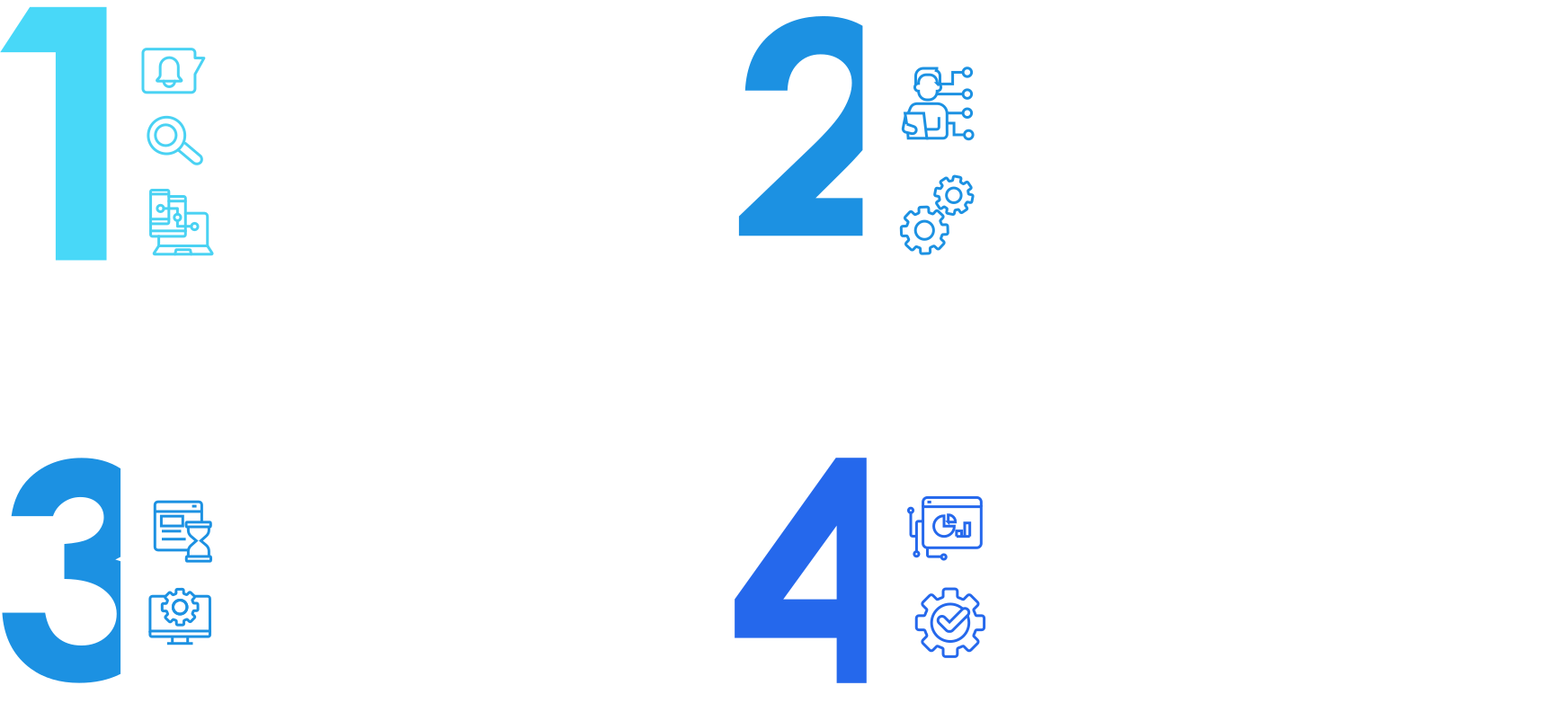
DRP Stages

Before the failover
Work plan before a contingency

During the Failover
Lifting of On-Premise servers to the cloud (RTO)

After the Failover
Servers in the AWS cloud (RPO)

FailBack
Procedures for returning to normal On-Premise

Linking
Updating agents for On-Premise AWS linking
Ensure the continuity of your business!
Request your DRP consultancy right now
Know our
success stories


A secure, scalable, and reliable environment for your data.
Information is the most valuable asset of a company; ensuring the security and availability of your critical data is essential. Cloud storage allows you to have on-demand capacity, without the need to acquire space or equipment in advance, thanks to scalability.

Etapas de DRP

General use:
General-purpose data storage that is frequently accessed. A wide variety of use cases, such as databases, daily corporate files, cloud applications, dynamic websites, content distribution, mobile applications, etc.

Infrequent access:
Data that is accessed less frequently but requires quick access when needed. This type of storage also works for creating secondary backups of local data or data that can be easily recreated.

Dead archive:
Secure, durable, and low-cost storage for archiving data. It supports long-term retention and digital preservation of data that is accessed once or twice a year, better known as dead archive.
Benefits


At Compucloud we carry out an evaluation of your company's needs in order to advise you on the data storage capacity you require and apply the pay-per-use model.
Know our
success stories
